
Types and Forms of Charcoal GrillsCharcoal cooking basicsOne can never replace the taste and flavor of foods cooked on a charcoal barbecue grill. The aroma fills the air in such a way that it makes your mouth water and your neighbors envious. Apart from the distinct taste that they render to foods, charcoal barbecue grills are also famous for various other reasons. Most importantly, they are affordable and available in every price range. Also, they are available in a variety of styles and are suitable for cooking almost any type of cuisine in the world. Charcoal used in barbecue cooking can be broadly classified into three different forms. These include lump coal, briquettes and extruded form. Each one of these is explained below in detail.
Apart from these two ingredients, briquette manufacturers also use a variety of substances and mix them with lump coal. Some of the ingredients that are commonly used include borax, sodium nitrate, sawdust, limestone and starch. Each of these ingredients has a distinct role in a briquette. Mineral carbon and brown coal serve as a heat source. While starch acts as a binding agent, sodium nitrate and saw dust perform the role of an accelerator, thus assisting in faster ignition. Borax is primarily used as a press release agent. Based on the ingredients present, briquettes can be divided into several forms. The most natural form of briquettes are those that contain a very basic mixture of charcoal and starch. Manufacturers also tend to mix paraffin so that the product ignites faster. Another variation is Mesquite that contains certain ingredients that can add flavor to the food. The smoke released by this type of color contains the flavor that gets infused into the food at the time of cooking. Most of the ingredients that are used in the process of making briquettes do not pose any health risk nor do they contaminate the food. Also, the ash that forms at the end of burning a briquette is heavier unlike lump wood coal where the ash is lighter. In fact, one can easily identify the difference between these two types of coals based on this factor. The most significant advantage of briquettes is that they are very economical and can be easily obtained. • Extruded charcoal: This form of charcoal is created by a specialized process known as extrusion. In this case, excessive pressure is applied on materials such as carbonized wood or raw ground wood. Under the impact of that extra pressure, these materials are pushed through a preset mold and come out in the form of charcoal. Extruded coal is obtained in the shape of logs. |
Fire Pit Plans & Outdoor Firepits > Charcoal Grills - Fire pits > Types of Charcoal Grills
|
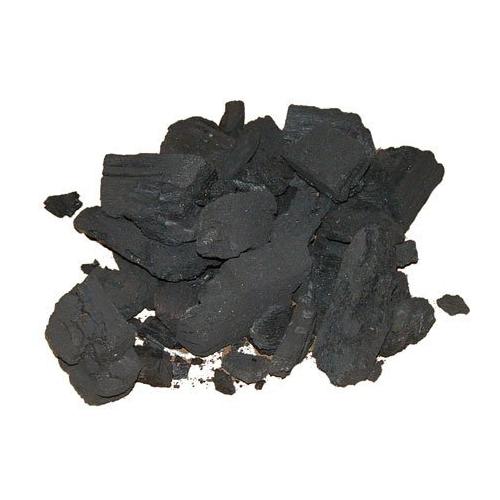 • Lump Charcoal: Also referred to as char, this is probably the most expensive
form of coal that is obtained by burning hardwood. In fact, lump coal is a black, brittle substance that is
considered to be the purest form of coal that is used for barbeque cooking. Lump coal is primarily a
combination of amorphous carbon and ash containing minute and irregularly arranged particles of granite. Apart
from these, lump coal also contains certain other impurities such as sulfur and other hydrogen compounds. A
good quality lump is very clean burning fuel that burns hotter than briquettes. Also, lump wood coal doesn’t
contain any additives or chemicals. As a result, it leaves almost no ash after burning, thus making the
process of cleaning easier.
• Lump Charcoal: Also referred to as char, this is probably the most expensive
form of coal that is obtained by burning hardwood. In fact, lump coal is a black, brittle substance that is
considered to be the purest form of coal that is used for barbeque cooking. Lump coal is primarily a
combination of amorphous carbon and ash containing minute and irregularly arranged particles of granite. Apart
from these, lump coal also contains certain other impurities such as sulfur and other hydrogen compounds. A
good quality lump is very clean burning fuel that burns hotter than briquettes. Also, lump wood coal doesn’t
contain any additives or chemicals. As a result, it leaves almost no ash after burning, thus making the
process of cleaning easier.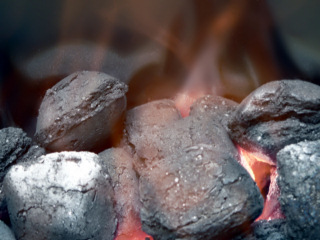 • Briquette charcoal: Briquettes are probably the most used form of coal
for barbecue cooking. These can be described in simple terms as blended form of lump wood charcoal and
anthracite. While the lump wood coal provides the unique flavor and aroma that is characteristic of wood
smoke, anthracite is used to give the coal its distinct appearance as well as to generate high temperature and
long lasting flame.
• Briquette charcoal: Briquettes are probably the most used form of coal
for barbecue cooking. These can be described in simple terms as blended form of lump wood charcoal and
anthracite. While the lump wood coal provides the unique flavor and aroma that is characteristic of wood
smoke, anthracite is used to give the coal its distinct appearance as well as to generate high temperature and
long lasting flame.



© 2006 - 2012 FirePits.com All Rights Reserved Worldwide Types of Charcoal Grills