Fire Pit Cooking Tips
5 Fire
Pit Cooking Tips - How to cook with
Firepits
Fire pit cooking is on of the oldest forms of cooking human being has encountered. It is
still one of the great way to enjoy time is fire pit cooking- especially in the summer. In the summer camping or
gossiping with the gang at the backyards, fire pit cooking is an adventure and mouth watering treats at the same
time. For the fire pit cooking lover, here are some useful tips.
1. Put a balance between the hole and turkey: How big the hole would be, would depend on the item on the menu!
The bigger the turkey, chicken or beef stake is- the bigger the whole would be.
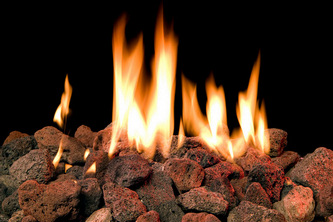 Still, as common instance, holes are good when they are a foot larger in all
directions. For instance, if the item to be cooked is 4 by 2 feet roughly, then the pit hole needs to be
around 6 by 4 feet. Still, as common instance, holes are good when they are a foot larger in all
directions. For instance, if the item to be cooked is 4 by 2 feet roughly, then the pit hole needs to be
around 6 by 4 feet.
Standard depth for fire pit is 3 feet. The hole should be about three feet deep. How big or intense the fire
will grow will depend on the pit’s depth.
2. Pick the right brick/stone size while pit lining: Usually, stones of bricks are used to line the pit. This helps
preserve the heat while the food is being cooked. Stones, as big as human head are best for this. But there is one
word of caution here- do not use the stones that have been under salt water. So avoid ocean stones. Like this,
geologic stones (i.e. those which are million years old) better be avoided. The reason for this caution with this
stone is- they have a tendency to crack or even explode when exposed to fire or heat. For those who often cook in
fire pits, it is better to have a permanent solution with bricks.

3. Prepare the coals in advance: For fire pit cooking a great deal of coals are needed. What typical campers or
cookers do is- filling the whole with logs and cooking the food until the logs burn to coals. But this is time
consuming. So other people prefer to use charcoals. But the truth is- you can always do with cheaper solutions. A
one foot deep hole full of coals is just fine and enough for the real cooking.

"The banana leaves or other forms of leaves were very
effective in protecting the package from fire or moisture"
4. Wrap the treat in a secure package: A basic thing to remember here is- the food has to be flavored in the
first place and only after that comes the issue of wrapping it. There is a common belief that bigger rocks are to
be kept adjacent to the animal’s body- especially when they are large one. But this hardly has any implications.
The bottom line here is- making the treat secured. To do this, it must be wrapped tight. The use of chicken wire is
popular on this regard.
In the past, banana leaves were used for this. The banana leaves or other forms of leaves were very
effective in protecting the package from fire or moisture. During recent years, the use of burlap bags are mass, as
they are intended to create the damp surface. Here aluminum foils are used to insulate the meat from coal. These
are all discussed for building a better insight for the cooker. Whatever measure the cooker takes, it must be made
sure that the meat is seasoned and well prepared.
5. Load and cook: The task in hand now is simple- loading meat in the pit. Here, one important task in hand is
to cover it up.
The idea here is scientific (the discovery was not meant to be scientific though)- this helps to make the burlap
insulate from burning by making the fire lack oxygen.
The coal stays heated for over 48 hours- though there would be no fire at all. As cooking goes on, the
vegetarian can add loads of green in the same process the meat was. Cooking can take 12 to 18 hours. So
fire pit cooking will need patient eaters!
|